
Experiences
Practice the moment before.
Before the argument turns, before the offer, before the message that pulls a group chat onto a corner: stand in the moment once, with people who push back, and find the move that changes how it ends. Peace Labs brings that practice to a classroom, a youth center, a church hall, a living room, a headset. Anywhere there is internet, there is a place to prepare.
Playing takes one confirmed email, or a link from a partner. Everything on this page is open.
Anywhere
Where Peace Labs happens
The classroom
Thirty phones, one scenario on the wall. A teacher pauses after the first choice and the room talks through what Nia should have said.
The youth center
Headsets on the table. A worker who grew up on this block leads the talk after every ending, with the group that lives it.
The church hall and the community room
Parents, elders, mentors. The same scenario their kids worked through, so the conversation at the kitchen table starts from the same place.
The living room
A phone on the couch at eleven at night, when the group chat is actually going. Practice for the moment, in the moment.
The virtual world
A VR headset and a controller, or a phone in a cardboard viewer: you stand in the lot, turn your head, and the crowd is behind you.
The moments
A thousand real-life moments, each one a scenario in days
A scenario starts as words from people who have stood in it. Peace Labs does the rest: a cast that stays consistent, a place, what each person knows, what sets them off and what calms them, and endings that are earned. Here are the first ones, and the ones that are next.
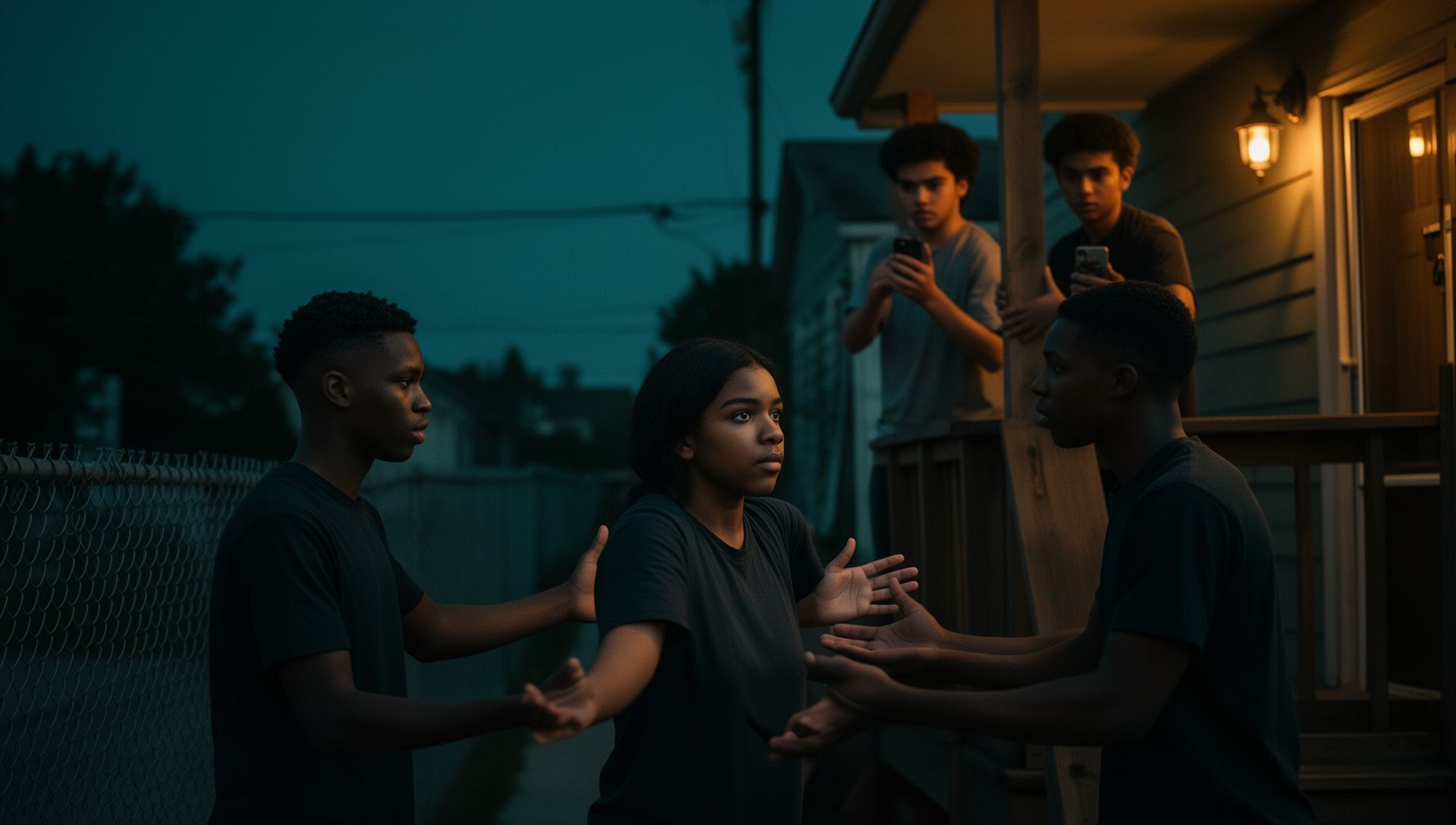
When an argument goes public
A cropped post, a parking lot, a crowd with phones up. Practice the four moves: distance, audience, information, support. One in three homicides begins as an argument.
The offer after the game
Someone from school offers pills before the party. Practice the no that keeps your respect and gets you home. Eighty-four percent of teen overdose deaths involve fentanyl.
The group chat
A screenshot, a dare, two hundred people watching a live. Practice cooling it down before it moves from the phone to the corner. Next from Peace Labs.
Someone is not breathing
Two thirds of young people who died of an overdose had someone in the room. Practice the call, the naloxone, the recovery position, the staying. Next from Peace Labs.
Say something
A friend says something that scares you. Practice noticing, asking directly, getting an adult, handing off to 988. Four in ten students feel persistently hopeless. Next from Peace Labs.
The worker, the teacher, the first week on the job
The same scenarios from the other side: the outreach worker arriving, the teacher in the hallway, the new hire at the counter when a customer will not leave.
The people
They answer back, and they stay themselves.
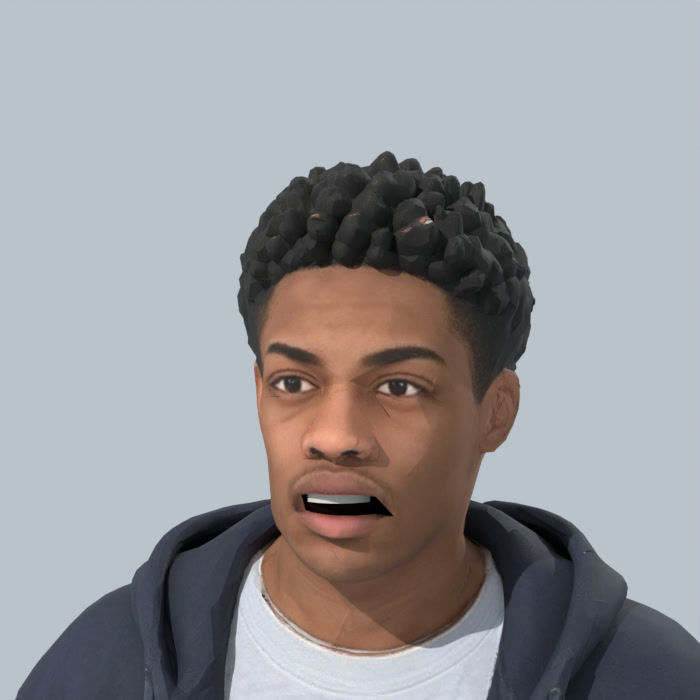
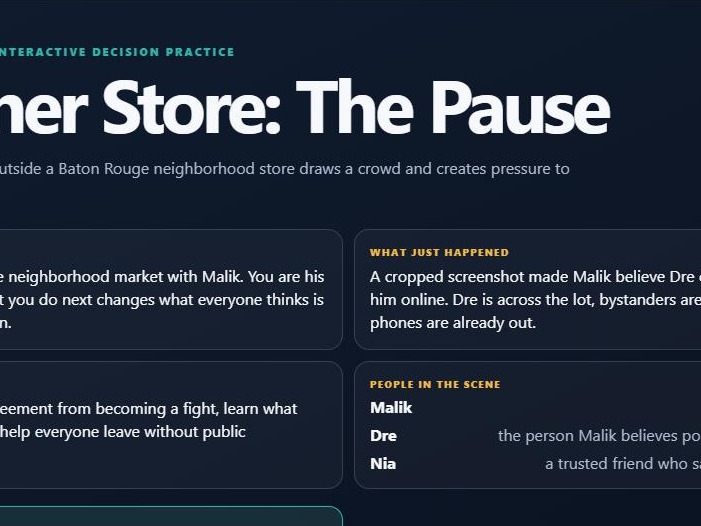
Malik, Dre and Nia are not actors in a video. They are Peace Labs characters with a face, a voice, a history, things they know and things they are not allowed to say yet. You speak or type; they reply in their own words, in their own voices, with only what they know. Malik in the parking lot is the same Malik after the Friday game, so a program can build a whole season and learners meet people they recognize.
The pressure
The pressure is on you. The endings are earned.
First person is the standard: the offer comes to you, not to a friend on screen. Every choice moves something real, distance, audience, information, support, and the people react to where that leaves them. There is no menu of four right answers and no score card at the end, only the ending you reached, performed, and the conversation about why.
How an experience is made
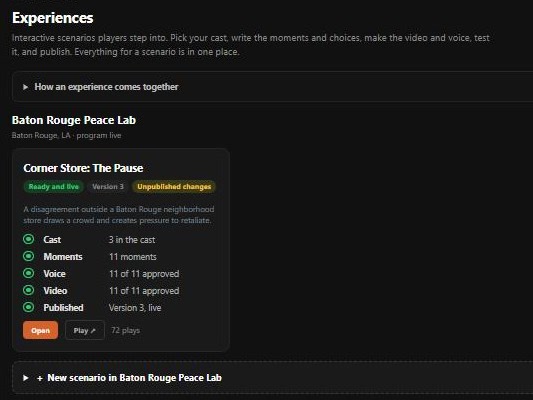
How Peace Labs turns a real moment into a performed one
The moment
Written with the people who stood in it: where it starts, who is watching, what makes it worse, what makes it stop.
The cast and the place
The Peace Labs studio builds the people, the place, the motion and the voices from text and reference pictures, on our servers. Nothing is filmed.
The rules
What each person knows and when they may say it, what sets them off, how the crowd changes the pressure, which endings are possible, and how intense the scenario is for which room.
Your city, your moments
Built in Baton Rouge, made to travel. A program brings its own corners, hallways and language; Peace Labs performs them.
Stand in one.
Playing takes one confirmed email, so the experiences stay with the people they are for. Partners can also share a link that opens a single scenario for a room.